
Hollow-Core vs Solid-Core Interior Doors: Which Is Right for Your Home?

When comparing hollow core vs solid core interior doors, hollow core offers lower cost and lighter weight, while solid core provides better sound control, durability, and a more premium feel. The best choice depends on budget, privacy needs, and room function. When planning a new build or remodel, interior doors may not feel like a major decision. However, the type of door you choose affects sound control, durability, appearance, and long-term satisfaction. The debate around hollow-core vs solid-core interior doors is one of the most common questions homeowners and contractors face. While both options look similar from the outside, their internal construction makes a significant difference. If you are deciding between hollow-core vs solid-core interior doors, understanding how each performs will help you choose confidently. What Is a Hollow-Core Interior Door? A hollow-core door is constructed with a lightweight internal structure, often a honeycomb cardboard or thin support grid, covered by a thin veneer or molded skin. These doors are popular because they are: In many production homes, hollow-core doors are standard because they reduce material cost and make installation faster. When comparing hollow core vs solid core interior doors, hollow core is typically the budget-friendly option. What Is a Solid-Core Interior Door? Solid-core doors feature a dense interior made from engineered wood, particleboard, or composite materials. The exterior may be MDF, veneer, or molded panel, but the interior mass creates a heavier and more substantial feel. Solid core doors are known for: In the hollow-core vs solid-core interior doors comparison, solid-core doors deliver enhanced performance in several key areas. Which Option Provides Better Sound Control? Sound privacy is often the biggest factor in the hollow-core vs solid-core interior doors decision. Hollow-core doors allow sound to pass through more easily. In busy households or homes with remote work setups, this can become noticeable. Solid-core doors reduce sound transmission because of their dense construction. Bedrooms, bathrooms, and home offices benefit most from this added mass. If privacy matters, hollow-core vs solid-core interior doors usually lean toward solid core for improved acoustic performance. How Do They Compare in Durability? Durability is another major difference. Hollow-core doors are lighter and more susceptible to dents or damage from impact. Over time, frequent use can show wear more quickly. Solid-core doors are heavier and more resistant to everyday bumps and scratches. For high-traffic areas or homes with children and pets, this added strength can make a difference. In the hollow core vs solid core interior doors comparison, solid core doors often hold up better in long term use. What About Cost Differences? Budget plays an important role in interior door selection. Hollow-core doors are typically more affordable than solid-core doors. For large projects with many openings, the cost difference can add up quickly. Solid-core doors require more material and manufacturing time, which increases upfront cost. When weighing hollow-core vs solid-core interior doors, homeowners should consider whether lower initial cost outweighs long term performance benefits. Do They Look Different? Visually, hollow-core vs solid-core interior doors can look almost identical. Both options are available in: The difference is felt more than seen. Solid core doors close with a heavier, quieter sound that many homeowners associate with quality. For design focused projects, appearance alone may not determine the choice in hollow core vs solid core interior doors. When Is Hollow-Core the Right Choice? Hollow core doors may be appropriate when: In rental properties or entry level homes, hollow-core remains a practical solution. When Is Solid Core the Better Investment? Solid core doors are often preferred when: In the hollow-core vs solid-core interior doors comparison, solid-core doors are typically viewed as an upgrade that enhances daily living. What Should Contractors Consider? Before finalizing a choice between hollow-core vs solid-core interior doors, contractors should confirm: Solid-core doors weigh more, which may require stronger hinges and careful installation. Planning ahead ensures smooth performance. Is There a Clear Winner? There is no universal answer in the hollow-core vs solid-core interior doors debate. Hollow-core offers affordability and lightweight installation. Solid-core offers improved sound control, durability, and perceived quality. For many homeowners, mixing both options makes sense. Solid-core doors can be installed in bedrooms and offices, while hollow-core doors may work well for closets or secondary spaces. The right decision depends on how each room is used and what level of performance you expect. Final Thoughts Interior doors are opened and closed every day. Their weight, sound, and feel become part of daily life. By carefully comparing hollow-core vs solid-core interior doors, homeowners and contractors can choose an option that aligns with budget, performance, and comfort goals. A thoughtful decision today prevents regret later.
Best Door for Tight Spaces: How to Choose the Right Solution for Small Rooms
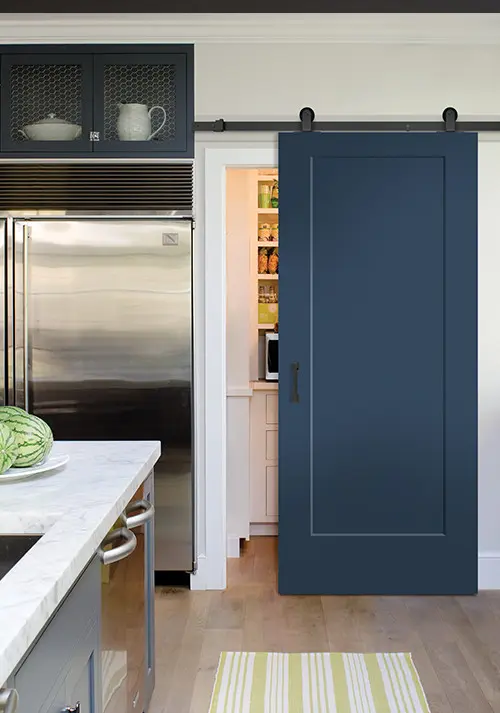
The best door for tight spaces depends on layout and privacy needs. Pocket doors maximize floor space, sliding doors save swing clearance with design flexibility, and bifold doors work well for closets and compact storage areas. Small rooms create design challenges. Bathrooms, closets, laundry rooms, hallways, and compact bedrooms often do not have the clearance needed for a traditional swinging door. When homeowners ask about the best door for tight spaces, they are usually trying to solve one problem. They need to save square footage without sacrificing function. Contractors face the same question during remodels and new builds, where layout flexibility is limited. If you are deciding on the best door for tight spaces, understanding how pocket, sliding, and bifold doors perform will help you choose the right fit. Why Are Traditional Hinged Doors a Problem in Small Rooms? A standard hinged door requires floor clearance to swing open. In a tight layout, that swing can: When space is limited, removing the swing path becomes the priority. That is why many homeowners start researching the best door for tight spaces instead of defaulting to a traditional hinged option. Are Pocket Doors the Best Doors for Tight Spaces? Pocket doors are often the first solution people consider. A pocket door slides into a cavity within the wall, completely disappearing when open. Because it does not require swing clearance, it frees up floor space. Pocket doors work especially well for: From a design standpoint, pocket doors offer a clean, minimal look. However, contractors should consider installation complexity. Pocket doors require: In new construction, pocket doors are easier to incorporate. In remodels, retrofitting can require additional framing work. For many homeowners, pocket doors remain one of the best door solutions for tight spaces when wall conditions allow. Are Sliding Barn Doors a Practical Option? Sliding barn-style doors mount on the surface of the wall and glide along an exposed or concealed track. They eliminate the swing radius of a hinged door, making them another contender for the best door for tight spaces. Sliding doors are popular in: The advantage of sliding doors is easier installation compared to pocket doors. They do not require opening the wall cavity. However, sliding doors require clear wall space adjacent to the opening. Furniture and light switches cannot interfere with the track path. Sliding doors also do not seal as tightly as traditional doors, which may affect sound privacy in certain applications. When visual impact and moderate space savings are priorities, sliding doors can be a strong choice. When Are Bifold Doors the Best Option? Bifold doors consist of two panels that fold inward on a track system. They are commonly used for closets and storage areas. In very narrow areas, bifold doors can be the best door for tight spaces because they reduce the swing footprint significantly. They are ideal for: Bifold doors are relatively simple to install and are widely available in molded panel, MDF, and other interior finishes. The tradeoff is that bifold doors do not provide the same sound isolation as solid swing doors or pocket doors. For closet applications, however, bifold doors remain one of the most practical space-saving solutions. What About Swing Direction Adjustments? Sometimes the best door for tight spaces is not a new door type but a different swing configuration. Before committing to pocket or sliding systems, contractors should evaluate: In some small bathrooms, an outswing door can solve clearance issues without introducing new framing requirements. Not every tight space requires specialty hardware. A simple reconfiguration may be sufficient. Which Option Provides the Most Privacy? Privacy often influences the best door for tight spaces decision. Pocket doors and sliding doors typically do not seal as tightly as traditional hinged doors. Sound may travel more easily around gaps. If privacy and sound control are priorities, consider: For closets or pantries, privacy is less critical, making bifold and sliding doors more practical. What Should Contractors Consider Before Installation? Choosing the best door for tight spaces requires careful planning. Contractors should confirm: Pocket doors require the most planning. Sliding and bifold doors are typically easier to retrofit. Proper installation ensures smooth operation and long-term performance. What Is the Most Versatile Option? There is no single best door for tight spaces that works in every situation. Pocket doors maximize floor space but require structural planning. Sliding doors offer design flexibility but need clear wall space. Bifold doors work well for closets, but are not ideal for primary room separation. The right choice depends on: Evaluating these factors early prevents layout frustration later. Final Thoughts Small rooms demand smarter solutions. The best door for tight spaces is the one that improves flow without compromising usability. Whether you choose pocket, sliding, bifold, or a modified swing configuration, thoughtful planning makes a measurable difference in how a space functions. Interior doors do more than separate rooms. In tight spaces, they shape how the entire layout works. Learn more about TIPS FOR DESIGNING SMALL SPACES FOR REMODELS